Health & Safety Policy — Commercial Waste Lambeth
 This Health and Safety policy describes the principles, responsibilities and practical measures we apply across our commercial waste operations and rubbish company service area. It sets out how we protect employees, contractors and the public during collection, transfer and handling of commercial waste and commercial rubbish services, and explains the commitment to continuous improvement, risk reduction and legal conformity.
We adopt a structured, risk-based approach to managing safety across the waste collection area. The policy covers scheduled collections, ad-hoc commercial skip operations, trade waste collections and depot activities. It applies to permanent employees, agency staff, contractors and visitors while they are engaged in work that falls within our remit as a commercial waste provider.
 The scope includes operational activities, transport and vehicle maintenance, manual handling, segregation of wastes including hazardous materials, and interactions with customers at commercial premises. It also covers duties to provide appropriate PPE and to ensure that work areas are maintained in a safe state to avoid slips, trips and falls.
Leadership, Roles and Responsibilities
Senior management is accountable for health and safety outcomes and will demonstrate visible leadership by resourcing safety measures and ensuring policy implementation. Line managers are responsible for translating policy into safe systems of work, and supervisors must ensure daily compliance, safe shift starts and effective communication of hazards.
All staff have a duty to take reasonable care for their own safety and that of others, to report unsafe conditions promptly and to follow safe operating procedures. We emphasise that safety is integral to operational performance across the commercial rubbish service, and non-compliance will be addressed through corrective action.
Key responsibilities include conducting risk assessments, maintaining training records, and ensuring appropriate qualifications for drivers and plant operators. We maintain clear accountability at each level and monitor performance through regular reviews and audits.
- Risk assessment and control
- PPE provision and enforcement
- Incident reporting and investigation
Risk Assessment, Training and Safe Systems
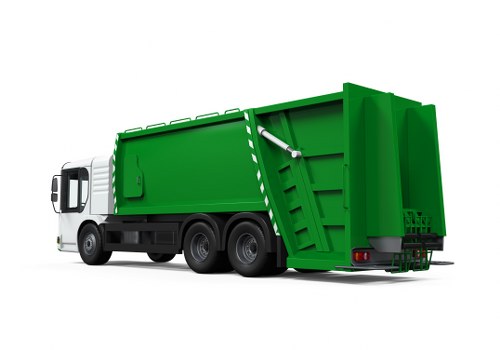 Risk assessments identify hazards such as manual handling injuries, vehicle movements, sharps, hazardous substances and public interactions. Controls include mechanical lifting aids, segregated loading zones, defined pedestrian exclusion areas and clear communication protocols for collections in mixed-use environments.
Training is role-specific and ongoing: driver safety, manual handling techniques, hazardous waste awareness, spill response, basic vehicle maintenance checks and first aid. Training records are retained and refreshed periodically to keep skills up to date and to reinforce safe behaviour across the waste collection area.
Safe systems of work are documented and accessible. Supervisors perform routine checks and conduct toolbox talks before shifts. Workers are encouraged to report near-misses and to contribute practical suggestions for safer processes, helping to build a positive safety culture in the commercial waste service.
Vehicle and plant safety measures include mandatory pre-start walkarounds, routine maintenance, secure load checks and driver training for reversing and manoeuvring in constrained sites. Fleet management focuses on preventing incidents through route planning and vehicle suitability assessments to match vehicle type to the task in hand.
Manual handling controls prioritise mechanical aids, team lifts and safe posture training to reduce musculoskeletal risk. Trolleys, sack trucks and lifting devices are provided where practicable, and staff are trained to plan lifts and use assistive equipment appropriately in the commercial rubbish service.
Hazardous wastes are segregated, labelled and handled in line with waste classification requirements. When specialist disposal is needed, consignments are documented and managed by trained personnel to prevent environmental harm and to ensure safe transfer through the waste management chain.
Incident reporting is mandatory: all injuries, illnesses, environmental spills and near-misses must be reported immediately to enable prompt response. Investigations seek root causes and identify corrective and preventative actions. Findings are shared across teams to prevent recurrence in our rubbish company service area.
Emergency preparedness includes spill kits, trained first aiders, and clear response plans for fire, chemical release or vehicle-related incidents. Regular drills and scenario-based briefings ensure staff can respond confidently and minimise harm to people and the environment.
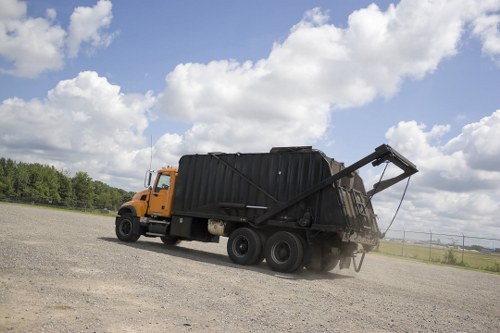 Monitoring comprises routine inspections, performance metrics and periodic third-party audits. We track both leading indicators (training completion, safety observations) and lagging indicators (incidents, lost time injuries) to inform management action and to demonstrate continuous improvement in safety outcomes.
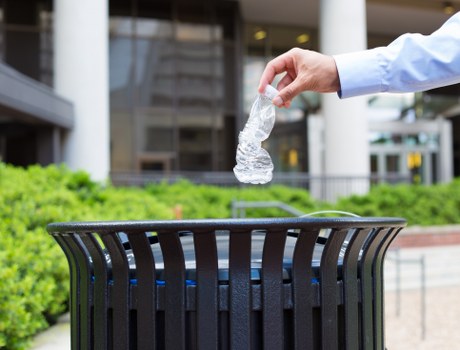 Continuous improvement is achieved through management review, workforce consultation and analysis of incident trends. We set measurable objectives to reduce incidents, improve compliance and enhance operational safety across the commercial waste service area, and we allocate resources to achieve those objectives.
Worker engagement is fostered through regular briefings, safety committees and systems for raising concerns. Management commits to listening to operational teams, investigating practical suggestions and implementing feasible improvements to reduce risk and improve day-to-day safety.
Policy review and governance: This Health & Safety policy will be reviewed annually or when significant changes occur in operations, legislation or technology. Senior leaders endorse the policy and ensure that governance arrangements are in place so that every part of the organisation understands and fulfils its responsibility for safe, compliant commercial rubbish collections and waste handling.
