Commercial Waste Lambeth
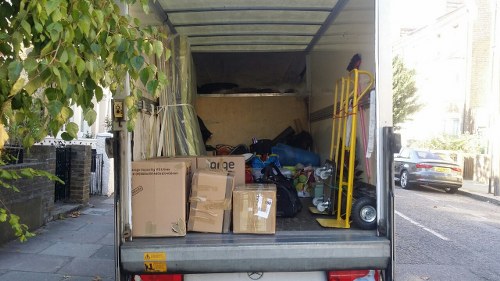
Commercial waste collection in Lambeth needs a service that can handle mixed business refuse with clear separation, lawful disposal and practical scheduling. We provide a focused approach for shops, offices, hospitality premises and other workplaces that produce everyday commercial waste, bulky items or recyclable materials. The aim is straightforward: keep waste moving out of the way, reduce disruption on site and make the next collection or clearance easier to manage.
Our service covers routine business waste removal, one-off clearances and selected specialist streams where the material is accepted. That can include office furniture, retail packaging, broken fixtures, unwanted stock, confidential paper for shredding, white goods and certain hazardous items, subject to the correct handling rules. We can also support businesses that need pricing and quotes information before they commit, so the enquiry can be built around the type of waste rather than a guess.
If you need commercial waste cleared in Lambeth, start with the items, access and timing, then request a quotation.
Business waste removal for day-to-day collections
Business waste removal is the core service for premises that need regular or occasional uplift of non-hazardous refuse. It suits bins, bags and loose waste from offices, small shops, studios and shared premises where accumulations can quickly affect floor space and working order. We handle the practical side of moving the material out, separating suitable recyclables where possible and arranging disposal through the correct route. Where it helps, our team can also discuss broader options for business waste removal so the service matches the amount and type of waste on site.
Commercial waste can vary more than domestic rubbish, so the most useful arrangement is often one that reflects the actual waste stream. Cardboard, mixed office waste, packaging film, old displays and non-confidential paper all require different handling considerations. A clear description of what is present helps us shape the collection and avoid unnecessary delays. If your site generates waste in regular waves rather than every day, the service can be planned around those peaks rather than forcing the premises into a rigid routine.
What we can normally help remove
Typical commercial items include bags of general refuse, empty packaging, dismantled shelving, worn office chairs, small filing units and other non-structural waste from normal trading. Where the premises have been reorganised, cleared after refurbishment or prepared for handover, the collection can be adapted to remove a broader set of items in one visit. The emphasis is always on safe loading, lawful disposal and keeping the site usable for staff and visitors.
Office clearance and workplace furniture
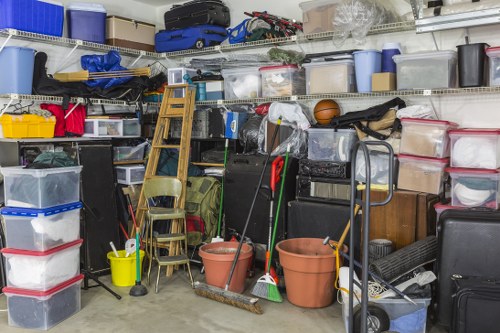
Office clearances need more than simple rubbish removal because the waste often includes furniture, technology, fixtures and mixed paperwork. We can clear desks, task chairs, cabinets, meeting tables, pedestals and other workplace furnishings that are no longer required. In many cases the job is best planned around access routes, lift use and building rules, especially where the premises share common areas or have limited loading space. If the site also needs removal of mixed office furniture, the service can sit alongside office clearance work for a more complete uplift.
Some workplaces need items separated before disposal, particularly where there is confidential paperwork, reusable equipment or materials with different treatment requirements. That means the work can be organised in phases: first the items that are ready to go, then anything that requires a more careful check. This approach helps keep the process manageable and reduces the risk of mixing material that should be handled differently. It also gives businesses a cleaner handover when they are changing layout, downsizing or vacating a suite.
Useful preparation usually means identifying what stays, what goes and what should be set aside for specialist handling. If there are stairs, narrow corridors, controlled access points or parking restrictions, those details help shape the collection plan. You do not need to prepare the whole site, but it is sensible to keep the waste accessible and separate anything that should not be lifted with the general clearance load. For many office jobs, a short written list is enough to request a quotation.
Furniture, fixtures and bulky item disposal
Furniture disposal is often a major part of commercial waste work because bulky items occupy more room than their quantity suggests. We remove items such as desks, shelving, tables, reception furniture, storage units and mixed soft furnishings where these are accepted for disposal. Where the material is suitable, the collection can be organised so that reusable items, recyclable parts and general waste are handled in the right order. That makes the service more efficient than loading everything together without thought.
Different furniture types create different loading challenges. Flat-pack items may be easy to dismantle, while older fitted pieces can be heavier, awkward or fixed in place. Upholstered items may need special attention because of their size and the materials involved. A good quotation takes these differences into account rather than treating every bulky item as identical. If you are comparing options, it is worth reviewing the destination for furniture disposal as well as the main clearance route, because the most suitable choice depends on what needs moving.
The same applies to mixed premises, where furniture sits alongside packaging, old stock or redundant equipment. In those cases the best outcome is usually achieved by grouping the waste by type and deciding what should be removed first. That can keep your premises clear enough for the next phase of work, whether that is redecoration, a layout change or a move to smaller accommodation.
Confidential shredding and sensitive paperwork
Some commercial waste needs extra care because it contains sensitive records rather than ordinary paper. We can support businesses that need confidential shredding as part of a wider waste clearance, helping separate paperwork that should not go into general recycling or mixed rubbish. This is especially useful for offices, professional services, clinics and customer-facing businesses that hold archived files, old forms, printouts or records destined for destruction. For a closer look at this route, see confidential shredding.
The important point is not simply to remove the paper, but to keep sensitive material distinct from other waste until it reaches the correct treatment process. Boxes, sacks and filing holders may all need to be treated differently depending on how the documents are stored. If your waste load contains both confidential and non-confidential items, it is sensible to list them separately so the collection can be planned properly. That avoids confusion on the day and helps keep the premises compliant with its own internal handling rules.
Not every business needs a permanent shredding arrangement. Some only require a one-off clear-out when records are being archived, moved or destroyed after a project finishes. In that case, the main thing is clarity: what the documents are, how much there is and whether any other waste should be taken at the same time. A precise description keeps the quotation useful and avoids building assumptions into the service.
Appliance, fridge and specialist item disposal
Commercial premises often need to dispose of items that are too awkward for ordinary general waste routes. Fridges, freezers, microwaves, vending equipment and other appliances can be collected where the item is accepted and prepared for lawful treatment. This is often relevant to cafés, convenience shops, staff kitchens, letting offices and small hospitality sites that replace equipment from time to time. If your needs are focused on this category, the relevant page is fridge and appliance removal.
Specialist items can involve size, weight and handling considerations that affect how the job is organised. Some units are simple to move once unplugged and emptied, while others need more thought because of awkward positioning or residual contents. The same applies to mixed waste loads that include appliances among other bulky materials. It is generally better to identify the appliance types early, rather than waiting until the collection is booked, because the handling requirements may differ from ordinary furniture or bagged waste.
Where a business is clearing part of a kitchen, break room or back-of-house storage area, it is often useful to combine the appliance uplift with other redundant items. That reduces repeat disruption and can make the site easier to return to working order. The goal is not simply to remove waste quickly, but to remove it in a way that fits the premises and the type of item being handled.
Hazardous waste and items needing careful handling
Not every commercial item belongs in the same collection. Some waste streams require careful handling because of their contents, condition or disposal route. Where accepted, hazardous waste disposal can cover items that need specialist assessment before removal, and businesses should never assume that a material is suitable for ordinary mixed waste. If this is the kind of service you need, use the relevant route at hazardous waste disposal rather than leaving the material mixed with general refuse.
This kind of work depends heavily on accurate description. Labels, containers, storage condition and the nature of the contents all matter because they affect how the waste is handled and whether it can be accepted at all. For that reason, the safest approach is to describe the items plainly and avoid guessing. If the material is only partly hazardous, or if the site contains a mixture of ordinary and specialist waste, separating the two categories before collection makes the process simpler and more reliable.
Businesses should also remember that some items are not appropriate for a standard office or shop clearance even if they appear small. The correct route is determined by the waste type, not the size of the item. A careful quotation can reflect that difference, which helps avoid misunderstanding and keeps the job within the right disposal framework.
Commercial builders waste and light refurbishment clearances
When a workplace has been altered, repaired or refreshed, there is often a layer of builders waste that is separate from day-to-day rubbish. That can include offcuts, packaging, broken fittings, removed panels and other leftover material from light refurbishment work. We can support sites that need this waste taken away without mixing it into ordinary business refuse. For jobs centred on renovation debris, the relevant service is builders waste clearance.
Commercial refurbishment waste is usually most manageable when it is assessed by material type. Heavy fragments, timber offcuts, packaging, plaster-related residues and dismantled fixtures can each affect loading and sorting differently. If the work involves a phased fit-out, it may be sensible to schedule removal after the messiest stage rather than trying to lift everything while trades are still working. That approach can save time on site and reduce the amount of rehandling needed.
For many businesses, the useful decision is whether to clear a site once or in stages. A single uplift is often better when the waste is already gathered, while staged removal helps if the works are ongoing. The right answer depends on how the premises are being used and what kind of waste is being produced, so a brief description of the job is usually enough to begin.
Recycling, reuse and material sorting
Commercial waste is not always a single mixed load. Some items may be suitable for recycling, some may be reusable in another setting and some will need general disposal. Where possible, we aim to support the sorting of materials so that the right stream is used for the right item. That can be especially helpful for offices, retailers and storage rooms where cardboard, paper, metal, plastic and furniture may all appear in the same clear-out. More information is available on recycling and sustainability for customers who want to understand that part of the service.
Sorting is not only about environmental preference; it also helps keep the collection efficient. Separating bulky items from light recyclables, for example, makes loading simpler and can prevent suitable materials from being mixed with waste that needs another route. If a business keeps a record of what is being cleared, it becomes easier to decide which items should be set aside before the team arrives. That matters especially where there are mixed materials from office changes, stock refreshes or store reconfiguration.
- Cardboard and packaging from deliveries
- Office paper and archive material
- Metal and mixed fixtures
- Furniture components that can be separated
- Residual general waste that cannot be reused
Planning a quotation and arranging access
To request a quotation for commercial waste in Lambeth, it helps to describe the main waste stream, the approximate volume and any access details that could affect loading. That might include floor level, lift availability, parking limits, opening hours or the need to work around customers and staff. The most useful quotes are based on what is actually there, so a clear list of items is better than a broad estimate. If you are ready to begin, our contact us page is the most direct route for an enquiry.
Photographs can be useful when the waste is bulky, mixed or difficult to describe, but a photo alone is not always enough. It helps to note what should be removed, what should stay and whether any item needs special handling. If the waste is spread across several rooms or floors, mention that too, because the layout can affect how the collection is planned. The more precise the description, the easier it is to give a quotation that matches the job and avoids surprises later.
If your business has a recurring pattern of waste rather than a one-off clear-out, it may help to outline that pattern in a short note. A simple description of the waste, the location and the preferred timing is often sufficient to start the process. From there, the collection can be shaped around the practical details rather than forcing the site into a standard format.
About Lambeth
Lambeth is a borough in south London on the southern bank of the River Thames, stretching from the riverfront at Westminster Bridge and Waterloo down through areas such as Vauxhall, Kennington, Stockwell, Brixton, Herne Hill, Tulse Hill and Streatham. The borough combines dense inner-city streets with longer residential corridors and a series of well-known parks and open spaces. Brockwell Park is one of the best-known green spaces, while Clapham Common lies partly within the borough’s wider urban setting and offers a large expanse of open ground, ponds and paths. The riverside has long been shaped by transport, trade and public buildings, with Lambeth Palace, the historic residence of the Archbishop of Canterbury, standing as one of the area’s most recognisable landmarks. Nearby, the Imperial War Museum in the former Bethlem Royal Hospital building adds a major cultural institution to the district’s built landscape. Brixton has developed a strong cultural identity through its markets, music venues and public spaces, while the borough as a whole includes a mix of Victorian terraces, interwar housing, post-war estates and newer developments. Rail and Underground links connect it closely with central London and neighbouring boroughs, and the Thames Path provides a notable waterside route along the northern edge. The combination of civic architecture, residential neighbourhoods, open parks and transport corridors gives Lambeth a varied urban character that is both historic and active.
Waste removal for changing premises
Some commercial jobs are not simply about taking away one category of waste. A shop refurbishment, office move or storage-room clear-out can produce mixed loads that include furniture, packaging, paper, equipment and leftover fittings. We can organise this kind of waste removal so the most awkward items are handled first and the rest follow in a workable order. Where there is a specific focus on general waste uplift, the service page at waste removal gives a useful entry point.
It is often sensible to decide which items are likely to be reused, which are to be recycled and which should be removed without delay. That order matters because it can affect how much space is needed on site and how many separate stages the job requires. If the premises are being handed back, refitted or reconfigured, the clearance can be tailored to the timing of those changes. The result is a cleaner transition and fewer loose ends for staff to deal with afterwards.
For a straightforward quotation, list the main items, the site access and the rough amount of waste. That simple outline gives enough detail to begin without overcomplicating the enquiry. When the information is clear, the collection can be arranged in a way that suits the premises and the waste type, rather than relying on guesswork.